Historical Significance
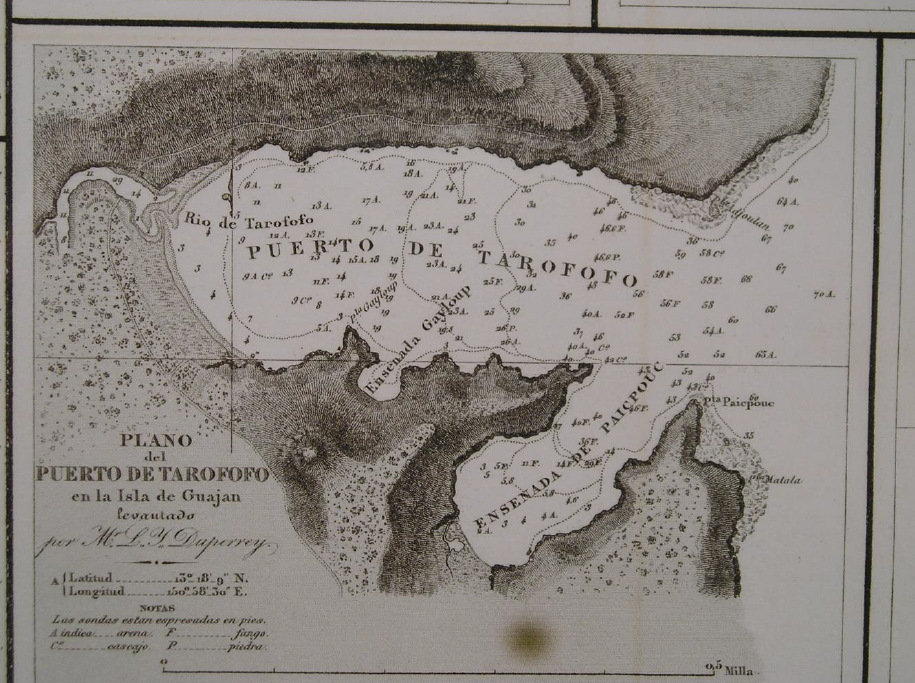
Talofofo Bay has long been a critical location in Guam’s history, both for the island itself and for the broader region of Micronesia.
1.Chamorro and Spanish Periods:
The area holds layers of historical references, including Chamorro chief Alonso Soo, after whom the nearby Alonso River is named. This chief played a significant role in the local governance during the pre-contact and Spanish periods. The region is also linked to Quiroga, a Spanish military figure, demonstrating the overlap of Chamorro and Spanish influences in the toponymy of Talofofo.
2.Refaluwasch Navigators:
Talofofo is historically significant as the first landing site of Refaluwasch navigators (from what is now known as the Caroline Islands) after the conclusion of the Spanish-Chamorro Wars. This event highlights the bay’s importance as a gateway for maritime connections between the Marianas and the broader Pacific.
3. Malaspina Expedition:
A noted historical expedition passed by there on February 19, 1792. Antonio Pineda, a Spanish botanist, crossed the Talofofo River as part of the Malaspina Expedition, a famous Spanish scientific exploration led by Alejandro Malaspina. The team’s crossing of the river at precisely 2:30 pm is one of the few instances where we have an exact historical event can be traced to an exact spot, date, and time.
4. Natural Disasters:
Natural disasters have also affected the area. On January 2, 1849 there was a strong earthquake that affected the whole of Guam. On Tarofofo bay it seems it was followed by a tsunami or sudden high tide, and as a result of it, the local girl Josefa Lujan, who was walking on the road, was washed by the waved and dragged into the water. Her body was not recovered and she was the only casualty of the earthquake.1
Talofofo Bay stands as a historically rich, ecologically diverse, and culturally significant site on Guam. Its layered history, from early Chamorro governance to Spanish exploration, along with its ecological beauty, makes it a vital part of the visitor experience on the island. This report outlines the key historical and natural elements that should be emphasized in developing visitor engagement at the local tourist center.
1 Ibañez, Aniceto; Resano, Francisco. Chronicle of the Mariana islands. MARC 1998. P. 5. Check page 130 for the original version, more precise.